WASHINGTON STATE SUPREME COURT
Complete Justice Profiles - 2026
Moses Lake Schools Transparency Initiative
Website: moseslakeschools.info
Research Compiled: January 16, 2026
Corrected: January 30, 2026 (timeline and position corrections)
Equal Scrutiny Applied to All Justices
EXECUTIVE SUMMARY
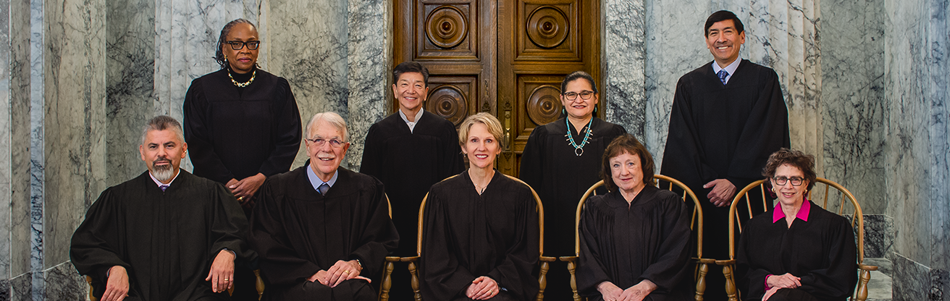
The Power You Don't See: Nine justices on the Washington State Supreme Court have more power over Moses Lake schools than the entire 19-member House Education Committee combined. Yet when you go to vote for them, all you see is "NON-PARTISAN" on the ballot.
The McCleary Decision (2012): These nine justices ordered the Washington State Legislature to spend an additional $13+ billion on K-12 education, held the Legislature in contempt, and imposed $100,000 per day fines until lawmakers complied.
Key Finding: The Supreme Court can override voter-approved initiatives, order billions in new spending, and fundamentally restructure how schools are funded—yet voters receive almost zero information about who these justices are, how they got there, or what they believe.
Current Composition (2026):
- 7 of 9 justices were appointed by Democratic governors (Gregoire, Inslee, Ferguson)
- 3 justices served on the 2012 McCleary court (including Chief Justice Stephens who wrote the opinion)
- Newest justice (Colleen Melody) appointed January 1, 2026 - has never been a judge before
- Longest-serving (Charles Johnson) - 35 years on the court
TABLE OF CONTENTS
- The Power Hierarchy: Who Controls Moses Lake Schools
- The McCleary Decision: How Nine Judges Changed Everything
- All 9 Current Justices (2026):
- Chief Justice Debra L. Stephens (Wrote McCleary Opinion)
- Associate Chief Justice Charles W. Johnson (35 years)
- Justice Barbara A. Madsen (On McCleary Court)
- Justice Steven C. González
- Justice Sheryl Gordon McCloud
- Justice Raquel Montoya-Lewis (First Native American)
- Justice G. Helen Whitener
- Justice Salvador A. Mungia (Elected 2024)
- Justice Colleen M. Melody (Appointed Jan 2026)
- The "Non-Partisan" Election Myth
- Power Structure Analysis
- 2026 Election Information
THE POWER HIERARCHY OVER MOSES LAKE SCHOOLS
Who Really Controls Education in Washington?
The Chain of Command:
- WASHINGTON STATE SUPREME COURT (9 Justices)
- Can order Legislature to spend billions
- Can hold elected officials in contempt
- Can override voter-approved initiatives
- Can restructure entire education funding system
- Final word on all education law
- WASHINGTON STATE LEGISLATURE
- Passes education laws
- Controls state education budget
- Must comply with Supreme Court orders
- HOUSE EDUCATION COMMITTEE (19 Members)
- Controls which bills advance
- Shapes education policy
- Cannot override Supreme Court
- OFFICE OF SUPERINTENDENT OF PUBLIC INSTRUCTION (OSPI)
- Implements state policy
- Administers education programs
- MOSES LAKE SCHOOL DISTRICT
- Follows state law and court orders
- Limited local control
Bottom Line: The Supreme Court sits at the top of this pyramid. Nine justices you probably never heard of have more power over your children's education than anyone else in state government.
THE McCLEARY DECISION: HOW NINE JUDGES CHANGED EVERYTHING
McCleary v. State of Washington (2012)
What Happened: On January 5, 2012, the Washington State Supreme Court ruled 9-0 (with partial dissents) that the State Legislature had failed its constitutional duty to "make ample provision for the education of all children."
The Order: The Court ordered the Legislature to fully fund K-12 education, which ultimately required $13+ billion in new spending over six years.
Who Wrote It: Justice Debra L. Stephens wrote the 62-page opinion. She is now Chief Justice and still serves on the court.
The Six-Year Battle (2012-2018)
2014: Court holds Legislature in contempt for failing to act quickly enough
2015: Court imposes $100,000 PER DAY sanctions until Legislature complies
2017: Legislature passes massive education funding bill
2018: Court finally lifts contempt sanctions, declares victory
What Changed:
- State now pays for teacher salaries (was local district responsibility)
- Property tax levies restructured
- $13+ billion in new state spending
- Massive shift in how schools are funded
- Proved Supreme Court can force Legislature to spend money
The Precedent:
McCleary established that the Supreme Court can:
- Order specific spending levels
- Hold elected officials in contempt
- Impose daily fines on government
- Supervise Legislature for years
- Enforce its interpretation of the Constitution
This is unprecedented power. And three of the justices who made this decision are still on the court today.
THE 9 CURRENT JUSTICES (2026)
Here are complete profiles of all nine current Washington State Supreme Court justices, presented with the same level of scrutiny and transparency we applied to the House Education Committee.
1. CHIEF JUSTICE DEBRA L. STEPHENS

Position: Chief Justice (Position 7)
Chief Justice Term: January 2025 - January 2029
First Appointed: November 2008 by Governor Christine Gregoire (D)
Elected: 2010, 2016, 2022
Term Expires: January 2029
McCleary Role: WROTE THE McCLEARY OPINION (2012)
BACKGROUND
Education:
- Gonzaga University School of Law (Spokane)
- First woman from Eastern Washington on Supreme Court
Professional Experience:
- Washington Court of Appeals, Division III (Spokane)
- Spokane County Deputy Prosecuting Attorney
- Private practice in Spokane
McCLEARY AUTHOR
Justice Stephens wrote the most consequential education decision in Washington State history.
Her 62-page McCleary opinion:
- Declared Legislature had failed constitutional duty
- Ordered $13+ billion in new spending
- Set up six years of judicial oversight
- Led to contempt sanctions and $100K/day fines
- Fundamentally restructured education funding
From Opinion to Chief Justice: The justice who wrote McCleary now leads the entire court as Chief Justice. This represents complete continuity from the 2012 decision to present day.
CHIEF JUSTICE POWERS
As Chief Justice, Stephens:
- Presides over all court proceedings
- Assigns opinion-writing responsibilities
- Represents court publicly
- Manages court administration
- Sets court agenda
- Serves as spokesperson for judiciary
DESCRIBED AS
Media and legal observers describe Justice Stephens as:
- "Brilliant"
- "Particularly avid and incisive questioner"
- Strong intellect and legal reasoning
- Detailed, comprehensive opinions
ELECTION HISTORY
2010: Elected to six-year term (after 2008 appointment)
2016: Re-elected unopposed
2022: Re-elected unopposed
Note: Has never faced a competitive election. All three elections were uncontested.
SIGNIFICANCE
Chief Justice Stephens represents complete continuity from McCleary to present:
- Wrote the McCleary decision in 2012
- Enforced it through 2018
- Now leads the court as Chief Justice
- Will serve through at least 2029
Direct Line: The justice who ordered $13 billion in education spending now leads the court that oversees education policy.
2. ASSOCIATE CHIEF JUSTICE CHARLES W. JOHNSON
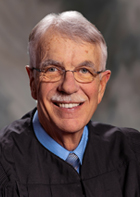
Position: Associate Chief Justice (Position 4)
First Elected: 1990 (defeated incumbent Chief Justice Keith Callow)
Term Expires: January 10, 2027
Mandatory Retirement: Age 75 (Constitutional requirement)
November 2026 Election: Seat will be on ballot
Years on Court: 35 years (longest-serving current justice)
McCleary Role: Voted with majority
BACKGROUND
Education:
- University of Washington School of Law (1974)
Professional Experience:
- Private practice
- Trial attorney
- No prior judicial experience before Supreme Court
HISTORIC 1990 ELECTION
Justice Johnson made history in 1990 by defeating sitting Chief Justice Keith Callow—one of the rare instances when a Washington Supreme Court incumbent lost re-election.
Campaign Issues:
- Judicial temperament
- Case management
- Court administration
35 YEARS ON THE COURT
Justice Johnson has served longer than any other current justice:
- 1990-2026: 35+ years
- Served under multiple Chief Justices
- Witnessed massive changes in education law
- On court for both major education funding cases
McCLEARY PARTICIPATION
Justice Johnson was on the court in 2012 when McCleary was decided and voted with the majority. He represents institutional continuity from that era to present.
ELECTION HISTORY
1990: Defeated incumbent Chief Justice Callow
1996: Re-elected
2002: Re-elected
2008: Re-elected
2014: Re-elected
2020: Re-elected unopposed
Current Term: Expires January 10, 2027 (election November 2026)
SIGNIFICANCE
Justice Johnson's 35-year tenure makes him the institutional memory of the court. He has participated in virtually every major education decision since 1990.
Mandatory Retirement: Constitutional requirement (Article IV, Section 3a) mandates retirement at age 75. Johnson's term ends January 10, 2027. Seat will be on November 2026 ballot.
3. JUSTICE BARBARA A. MADSEN

Position: Justice (Position 5)
First Elected: 1992
Term Expires: January 2029
Years on Court: 33+ years
Former Chief Justice: 2010-2017
McCleary Role: Chief Justice when McCleary decided; partially dissented on judicial oversight
BACKGROUND
Education:
- University of Washington School of Law (1974)
Professional Experience:
- King County Superior Court judge
- Private practice
- Third woman to serve on Washington Supreme Court
CHIEF JUSTICE DURING McCLEARY
Justice Madsen was Chief Justice in January 2012 when the McCleary decision came down. This gave her unique authority and responsibility for one of the most consequential decisions in state history.
McCLEARY PARTIAL DISSENT
Important Nuance: While Justice Madsen agreed the state had failed its constitutional duty to fund education, she partially dissented on the court's decision to retain jurisdiction and oversee the Legislature.
Her Concern: Separation of powers. She argued the court was overstepping its bounds by supervising the legislative branch for years.
The Irony: As Chief Justice, Madsen presided over the very judicial supervision she had warned against.
GENDER AND JUSTICE COMMISSION
Justice Madsen chairs the Washington State Gender and Justice Commission, which focuses on:
- Gender equity in courts
- Bias in legal system
- Women's rights in legal proceedings
Critics: Some conservative legal observers say Madsen "wants to drive the court in a certain direction" focused on gender equity.
ELECTION HISTORY
1992: Elected (third woman on court)
1998: Re-elected
2004: Re-elected
2010: Re-elected
2016: Re-elected
2022: Re-elected unopposed
SIGNIFICANCE
Justice Madsen represents direct continuity from McCleary era:
- Was Chief Justice when it was decided
- Participated in all enforcement actions
- Still serves today
- Term runs through 2029
4. JUSTICE STEVEN C. GONZÁLEZ
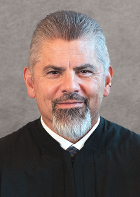
Position: Justice (Position 8)
First Appointed: January 2012 by Governor Christine Gregoire (D)
Elected: 2012, 2018, 2024
Term Expires: January 2031
BACKGROUND
Education:
- University of California, Berkeley School of Law
Professional Experience:
- King County Superior Court judge
- Seattle Municipal Court judge
- Public defender
- Immigration attorney
APPOINTED WEEKS BEFORE McCLEARY
Timing: Justice González was appointed in January 2012, just weeks before the McCleary decision was announced. While he did not participate in the original decision, he has been deeply involved in its enforcement and subsequent education cases.
BACKGROUND AS PUBLIC DEFENDER
Justice González's experience as a public defender and immigration attorney gives him a different perspective from many justices:
- Represents defendants, not prosecutors
- Immigration law expertise
- Criminal justice reform focus
- Emphasis on access to justice
JUDICIAL PHILOSOPHY
Described as progressive on:
- Criminal justice issues
- Immigration rights
- Access to justice
- Public defender perspective
ELECTION HISTORY
2012: Elected after 2012 appointment
2018: Re-elected
2024: Re-elected
SIGNIFICANCE
Justice González represents the generation that has enforced McCleary since its inception, even though he wasn't on the court when it was decided.
5. JUSTICE SHERYL GORDON McCLOUD

Position: Justice (Position 9)
First Appointed: June 2013 by Governor Jay Inslee (D)
Elected: 2014, 2020
Term Expires: January 2027
BACKGROUND
Education:
- New York University School of Law
Professional Experience:
- Washington Court of Appeals, Division I
- King County Superior Court judge
- Private practice
- Complex civil litigation
APPOINTED DURING McCLEARY ENFORCEMENT
Justice Gordon McCloud joined the court in 2013, during the height of McCleary enforcement. She has participated in:
- 2014 contempt order
- 2015 sanctions ($100K/day)
- 2017-2018 final enforcement
- Post-McCleary education cases
JUDICIAL APPROACH
Known for:
- Detailed legal analysis
- Complex litigation experience
- Thorough written opinions
ELECTION HISTORY
2014: Elected after 2013 appointment
2020: Re-elected
Next Election: November 2026
SIGNIFICANCE
Justice Gordon McCloud has been part of the McCleary enforcement era, voting consistently to maintain pressure on the Legislature.
6. JUSTICE RAQUEL MONTOYA-LEWIS
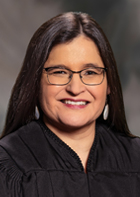
Position: Justice (Position 3)
First Appointed: December 2019 by Governor Jay Inslee (D)
Elected: November 2020
Term Expires: January 10, 2027
2026 Status: NOT SEEKING REELECTION
Announced Plans: Write books, teach, mentor
Historic First: First Native American justice on Washington Supreme Court
BACKGROUND
Tribal Affiliation:
- Enrolled member: Pueblo of Isleta (New Mexico)
- Descendant: Pueblo of Laguna (New Mexico)
- Both are federally recognized tribes
Education:
- University of Washington School of Law (1995, 1996)
Professional Experience:
- Whatcom County Superior Court judge
- Bellingham Municipal Court judge
- Tribal court judge
- Public defender
- Director, Tribal Court Public Defense
HISTORIC SIGNIFICANCE
Justice Montoya-Lewis broke multiple barriers:
- First Native American on Washington Supreme Court
- First Native American elected to statewide office in Washington
- Brings tribal justice system perspective
- Expertise in tribal law and sovereignty
TRIBAL LAW EXPERTISE
Justice Montoya-Lewis brings unique experience:
- Served as judge in tribal courts
- Understands tribal sovereignty issues
- Expertise in federal Indian law
- Public defense in tribal communities
2020 ELECTION
Historic Victory: After her appointment in 2019, Justice Montoya-Lewis ran for election in November 2020 and won, becoming the first Native American elected to statewide office in Washington.
Campaign Focus:
- Access to justice
- Tribal sovereignty
- Public defense
- Underserved communities
SIGNIFICANCE
Justice Montoya-Lewis represents diversity on the court and brings tribal justice perspective to education and other issues affecting Native American communities.
Departure: Term ends January 10, 2027. Not seeking reelection in November 2026. Seat will be on ballot for new justice.
7. JUSTICE G. HELEN WHITENER
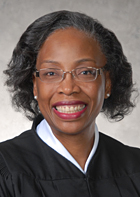
Position: Justice (Position 6)
First Appointed: April 2020 by Governor Jay Inslee (D)
Elected: November 2022
Term Expires: January 2029
BACKGROUND
Education:
- Seattle University School of Law
Professional Experience:
- Washington Court of Appeals, Division I
- King County Superior Court judge
- Civil litigation
APPOINTED DURING COVID
Justice Whitener was appointed in April 2020, during the height of the COVID-19 pandemic. Her appointment continued the trend toward greater diversity on the court.
COURT DIVERSITY
After Justice Whitener's appointment in 2020, the Washington Supreme Court was called "arguably the most diverse court, state or federal, in American history" by legal observers.
2020 Composition:
- Majority women (6 of 9)
- Majority people of color
- First Native American justice
- LGBTQ+ representation
ELECTION HISTORY
November 2022: Ran unopposed for full six-year term
Note: Has never faced a competitive election.
SIGNIFICANCE
Justice Whitener is part of the court's most recent transformation toward greater diversity and represents the Inslee-era appointments.
8. JUSTICE SALVADOR A. MUNGIA
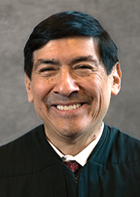
Position: Justice (Position 1)
Elected: November 2024
Term Begins: January 2025
Term Expires: January 2031
Unique Status: First justice elected WITHOUT prior gubernatorial appointment since 2012
BACKGROUND
Education:
- Seattle University School of Law
Professional Experience:
- Washington Court of Appeals, Division I
- King County Superior Court judge
- Immigration attorney
- Public service background
2024 ELECTION: COMPETITIVE RACE
Justice Mungia's 2024 election was unusual because it was actually competitive—most Supreme Court races in recent years have been uncontested.
The Race:
- Open seat (no incumbent)
- Multiple candidates
- Actual campaign required
- Mungia won with 52% of vote
Significance: First truly competitive Supreme Court race in years. Most justices run unopposed.
NO PRIOR APPOINTMENT
Unusual Pattern: Most current justices were first appointed by a governor, then later elected. Justice Mungia is the first since 2012 to be elected directly without first being appointed.
This makes him:
- Less beholden to any governor
- Product of electoral process
- Voter's choice, not appointee
NEWEST MEMBER
As the newest elected justice (as of January 2025), Justice Mungia is still establishing his judicial approach and building relationships on the court.
SIGNIFICANCE
Justice Mungia represents a rare instance of competitive election to the Supreme Court and brings fresh perspective as someone not appointed by a governor.
9. JUSTICE COLLEEN M. MELODY

Position: Justice (Position 1)
Appointed: November 2025 by Governor Bob Ferguson (D)
Took Office: January 1, 2026
Replaced: Justice Mary Yu (Position 1, retired December 31, 2024)
Term Expires: December 31, 2028 (Yu's unexpired term)
Must Run in November 2026: To keep seat beyond 2028
Unique Status: Appointed just weeks ago; has never been a judge before
BACKGROUND
Education:
- University of Washington School of Law (graduated first in her class)
- University of Washington, undergraduate
- Originally from Spokane, Washington
Professional Experience:
- Chief, Wing Luke Civil Rights Division (Attorney General's Office, 2015-2025)
- U.S. Department of Justice, Civil Rights Division (4 years)
- Never served as a judge before Supreme Court appointment
THE NEWEST JUSTICE
Justice Melody took office January 1, 2026—just 15 days ago. She is the 100th justice in Washington Supreme Court history.
APPOINTED BY FERGUSON
Close Relationship: Governor Bob Ferguson appointed Justice Melody after working closely with her for a decade when he was Attorney General.
Ferguson on Melody:
"Colleen Melody has devoted her career to standing up for those who often don't have a voice in our justice system. As Attorney General, I worked extremely closely with Colleen, where I had a front row seat to her immense legal skills, prodigious work rate, and passion for justice."
CIVIL RIGHTS ATTORNEY BACKGROUND
Wing Luke Civil Rights Division: Justice Melody led this division for 11 years, growing it from creation to 35 lawyers and staff.
Major Cases:
- Trump Muslim Travel Ban: Co-led Washington's successful challenge (2017)
- DACA Protection: Won 2018 court order still protecting 20,000 Washington Dreamers
- Transgender Military Service Ban: Challenged (2018)
- Birthright Citizenship: Won first temporary restraining order against Trump's attempt to revoke birthright citizenship (2025)
- Abortion Medication Access: Co-led nationwide multi-state lawsuit
NEVER BEEN A JUDGE BEFORE
Unusual But Legal: Justice Melody has never served as a judge at any level before being appointed to the Supreme Court.
Washington Law: The only requirement for serving on the Supreme Court is being admitted to practice law in Washington. Prior judicial experience is not required.
Precedent: About half of Washington Supreme Court justices historically have come directly from legal practice without prior judicial experience.
Critics Ask: Should someone jump straight to the state's highest court without any experience as a judge?
Supporters Respond: Legal brilliance and civil rights litigation experience are more important than judicial resume.
PROGRESSIVE CIVIL RIGHTS RECORD
Justice Melody's decade of work focused on:
- Immigration rights
- LGBTQ+ rights
- Racial justice
- Reproductive rights
- Anti-discrimination enforcement
- Challenging federal government overreach
Clear Progressive Stance: Her entire career has been fighting for progressive causes and civil rights enforcement.
2026 ELECTION REQUIREMENT
Justice Melody must run for election in November 2026 to retain her seat for the remainder of Justice Yu's unexpired term (through 2028).
This means:
- Less than one year on the bench before facing voters
- Must campaign while learning the job
- Voters will decide if she stays
AWARDS AND RECOGNITION
Legal Foundation of Washington: Charles A. Goldmark Distinguished Service Award (2018)
American Immigration Lawyers Association: Jack Wasserman Memorial Award (2017)
Attorney General's Office: Steward of Justice Award (2018, highest honor)
PERSONAL LIFE
Residence: Vashon Island (near Seattle)
Family: Married to Zach Hoit (project manager), two daughters
SIGNIFICANCE
Justice Melody represents several historic firsts and unusual circumstances:
- Newest justice: Just took office January 1, 2026
- Never been a judge: Straight from legal practice to Supreme Court
- Progressive civil rights background: Entire career fighting for progressive causes
- Close ties to Governor: Appointed by Ferguson who she worked for
- Must campaign immediately: Faces election in just 10 months
Key Questions:
- How will her civil rights activism translate to judicial decisions?
- Can someone learn to be a Supreme Court justice in less than a year?
- Will voters retain her in November 2026?
- Does her progressive background indicate how she'll rule on controversial cases?
THE "NON-PARTISAN" ELECTION MYTH
What You See on the Ballot
When you vote for Supreme Court justices, here's all you get:
☐ DEBRA L. STEPHENS
Supreme Court Justice, Position 7
☐ [Challenger Name]
[Occupation]
That's it. No party affiliation. No background. No information about:
- Who appointed them
- What they believe
- How they've ruled
- Who funds their campaigns
- What organizations endorse them
- Their judicial philosophy
What You DON'T See
If the ballot told the truth about Justice Stephens, it might say:
☐ DEBRA L. STEPHENS
Supreme Court Justice, Position 7
- Appointed by Governor Christine Gregoire (Democrat)
- Wrote McCleary opinion ordering $13 billion in spending
- Now serves as Chief Justice
- 27 years on Court of Appeals and Supreme Court
- Progressive voting record
- Gonzaga Law School graduate
But you don't get any of that information. Just "Non-Partisan."
The Reality Behind "Non-Partisan"
7 of 9 current justices were appointed by Democratic governors:
- Governor Christine Gregoire (D): Stephens, González
- Governor Jay Inslee (D): Montoya-Lewis, Whitener, Gordon McCloud (replacement for Yu who was also Inslee appointee)
- Governor Bob Ferguson (D): Melody
Only 2 were originally elected (not appointed):
- Charles Johnson (1990)
- Barbara Madsen (1992)
The Pattern: Governors appoint justices who share their values. Those justices then run for re-election labeled "non-partisan" with huge incumbent advantages.
Incumbent Re-Election Rate: Nearly 100%
Recent Supreme Court Elections:
2024: Three races
- González: Re-elected
- Mungia: Won open seat (competitive)
- Third race: Incumbent unopposed
2022: Three races
- Stephens: Unopposed
- Whitener: Unopposed
- Madsen: Unopposed
2020: Three races
- Gordon McCloud: Re-elected
- Montoya-Lewis: Won after appointment
- Johnson: Unopposed
Pattern Since 2010: Only ONE incumbent has lost re-election (Richard Sanders, 2010). Almost all races are uncontested or easy wins for incumbents.
Why Incumbents Almost Always Win
- Name recognition: Voters recognize incumbent names
- "Non-partisan" label: No party information helps incumbents
- Low information: Voters know almost nothing about candidates
- Judicial restraint: Challengers can't criticize judges' decisions effectively
- Fundraising advantage: Incumbents have better access to legal community donors
- Voter default: "Keep the judge" is easy choice when you don't know anything
The Irony
We spent dozens of hours researching:
- House Education Committee members (19 people)
- Their voting records, PDC violations, organizational ties
- Who they are, what they believe, how they vote
But when it comes time to vote for the nine people who can:
- Order billions in new spending
- Hold elected officials in contempt
- Override voter-approved initiatives
- Restructure entire government programs
We get almost zero information.
POWER STRUCTURE ANALYSIS
Who Really Has Power Over Moses Lake Schools?
The Truth About Power:
| Entity | Number of People | Power Level | Voter Information |
|---|---|---|---|
| WA Supreme Court | 9 | HIGHEST - Can order billions in spending | ❌ Almost none ("Non-partisan") |
| Legislature | 147 | HIGH - Passes laws, controls budget | ✅ Party, voting record, background |
| House Ed Committee | 19 | MEDIUM - Controls which bills advance | ✅ Full transparency (via our research) |
| OSPI | 1 Superintendent | MEDIUM - Implements policy | ✅ Statewide elected office |
| Moses Lake School Board | 5 | LOW - Must follow state law | ✅ Local candidates, known to voters |
The Paradox: The nine people with the MOST power get the LEAST scrutiny from voters.
What The Supreme Court Can Do (That Others Cannot)
- Order Spending: Can force Legislature to spend billions (McCleary)
- Hold Legislature in Contempt: Can sanction elected officials ($100K/day)
- Override Initiatives: Can strike down voter-approved laws (Charter Schools Initiative, 2015)
- Abolish Penalties: Abolished death penalty (2018)
- Restructure Government: Can force fundamental changes to how government operates
- Final Word: No appeal from Supreme Court decisions
Compare to Education Committee:
- ❌ Cannot force spending
- ❌ Cannot override voters
- ❌ Cannot hold anyone in contempt
- ✅ Can propose legislation (which can be blocked)
- ✅ Can hold hearings (but no enforcement power)
The McCleary Precedent
What McCleary Established:
The Supreme Court proved it can:
- Interpret the Constitution to require specific spending
- Supervise the Legislature for years
- Impose escalating sanctions
- Force fundamental policy changes
- Assert judicial supremacy over elected branches
This power has NO precedent in Washington history before McCleary.
Three Justices Remain From McCleary Court
- Chief Justice Debra L. Stephens: Wrote the opinion, now leads the court
- Justice Barbara A. Madsen: Was Chief Justice when decided
- Justice Charles W. Johnson: Voted with majority
Direct continuity from 2012 to 2026.
2026 ELECTION INFORMATION
Three Supreme Court Seats on November 2026 Ballot
Position 4: Associate Chief Justice Charles W. Johnson
- MANDATORY RETIREMENT at age 75 (Constitutional requirement)
- Current term expires January 10, 2027
- Longest-serving justice (35 years)
- Election November 2026, new justice sworn in January 2027
Position 3: Justice Raquel Montoya-Lewis
- NOT SEEKING REELECTION (announced personal decision)
- Current term expires January 10, 2027
- First Native American justice in state history
- Plans to write books, teach, and mentor
- Election November 2026, new justice sworn in January 2027
Position 1: Justice Colleen M. Melody
- Must run in November 2026 to keep seat (appointed to complete Yu's term for Position 1)
- Appointed January 1, 2026 by Governor Ferguson
- Current term expires December 31, 2028
- Will have less than one year on bench before election
- Never been a judge before
- Must campaign while learning the job
Summary: Two seats opening (Johnson mandatory retirement at age 75, Montoya-Lewis not seeking reelection) + one newly appointed justice (Melody) running to keep her seat = three races on your November 2026 ballot.
This is your opportunity to research these justices and the candidates seeking to replace Johnson and Montoya-Lewis.
Learn more: Deep research on 2026 candidates (O'Donnell & Diaz)
CONCLUSION
Key Takeaways for Moses Lake Residents:
- The Supreme Court has extraordinary power over education—more than the entire Legislature combined.
- McCleary changed everything. Nine justices ordered $13 billion in new spending and restructured school funding.
- Three justices from McCleary still serve, including Chief Justice Stephens who wrote the opinion.
- 7 of 9 current justices were appointed by Democratic governors, not originally elected by voters.
- Voters get almost no information about these justices on the ballot—just "Non-Partisan."
- Three seats are up for election in November 2026, including the newest justice who has never been a judge.
- Incumbent re-election rate is nearly 100%—voters almost never remove sitting justices.
The Question: Should the nine people with the most power over Moses Lake schools continue to receive the least scrutiny from voters?
This document provides the transparency that the ballot does not.
ABOUT THIS RESEARCH
Project: Moses Lake Schools Transparency Initiative
Website: moseslakeschools.info
Purpose: Provide Moses Lake community with comprehensive, unbiased information about education officials who control Moses Lake School District policy
Research Standard: Equal scrutiny for all justices regardless of appointing governor
Funding: Independent research, no organizational backing
Sources:
- Washington Courts official website
- Supreme Court opinions and orders
- Governor appointment announcements
- Election results (Secretary of State)
- Legal news coverage (Seattle Times, Washington State Standard, etc.)
- Bar association records
- Biographical information from official sources
Methodology: Same rigorous research applied to all justices, regardless of background or appointing governor.